NIFA awards $8.2 million for food-animal veterinary services and training
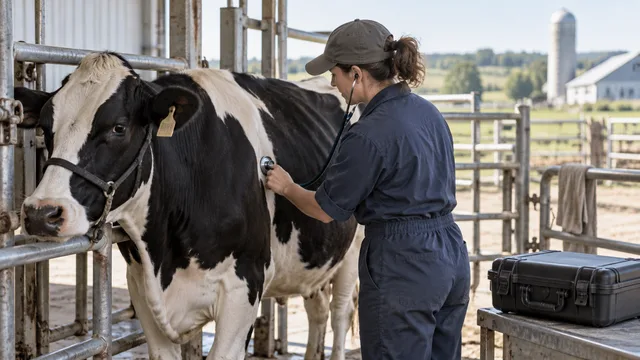
The 34 grants include 16 education and training awards and 18 awards supporting rural practices in designated veterinary shortage areas.
Research Facilities Act Program awards cover planning, construction and renovation of agricultural research infrastructure across the United States.
Read the story
A FoodRadar perspective
The developments that matter, with the context to understand them.
Meet FoodRadar ↗The 34 grants include 16 education and training awards and 18 awards supporting rural practices in designated veterinary shortage areas.

The support covers ten research awards and one workshop award under a programme intended to inform federal decisions on environmental effects.

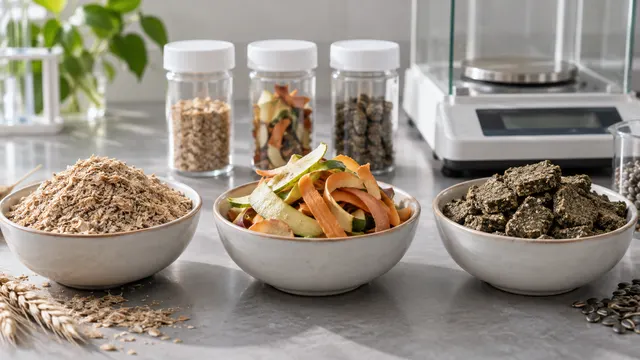
Six interdisciplinary projects address topics including biopackaging, biomass supply chains, upcycling and conservation.

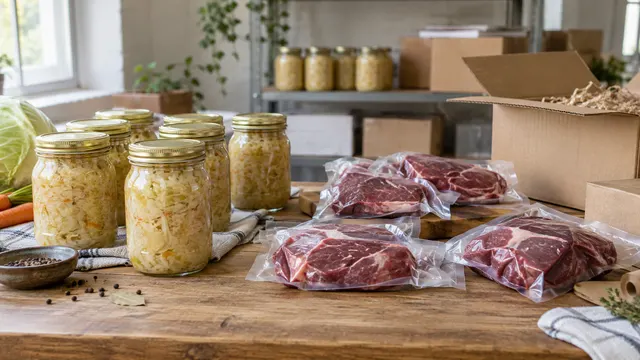
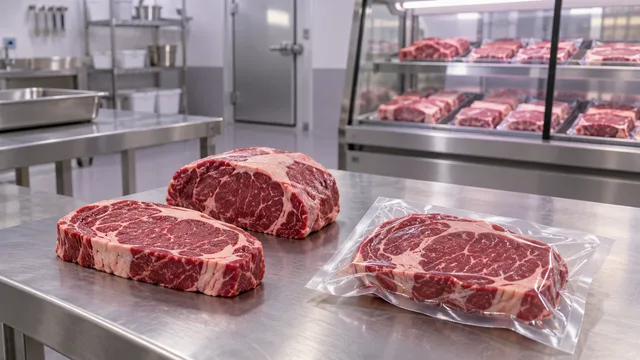
Microcosm Farm received $199,719 for its sauerkraut products, while Savannah Ridge Farms will use $181,114 to expand and market its pasture-raised yak meat business.
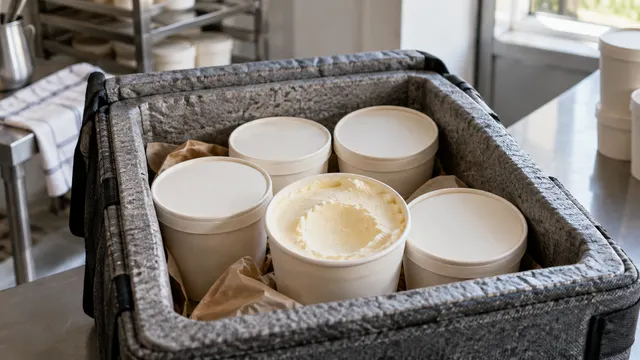
The Wyoming dairy and creamery plans to use working capital for processing labour, marketing supplies and delivery of its ice cream products to expand its customer base.
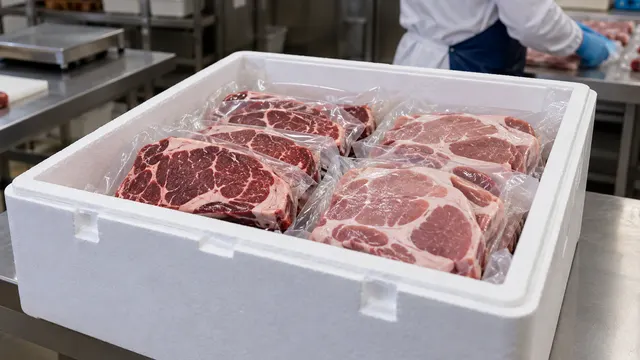
The Louisiana producer plans to use the grant for marketing, transport and processing of its value-added beef and pork products.
An October review examines muscle stem cells, culture media, scaffolds and bioprocessing as interconnected requirements for cultured meat.
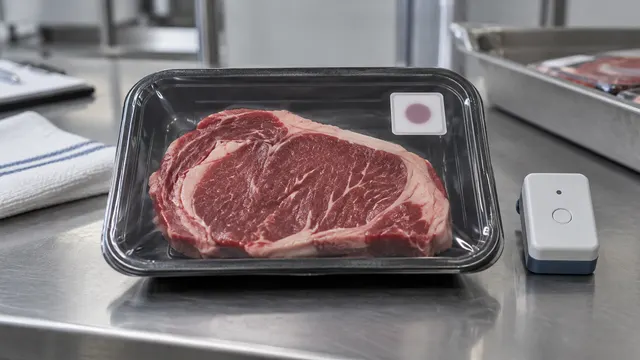
The October narrative review examines sensing, intelligent packaging and digital integration through robustness, scalability, digital compatibility and usefulness for decisions.
A USDA grant will fund technical assistance for farming, transport and biofuel businesses in Lafourche Parish to strengthen the sugarcane bagasse supply chain.
A review of four Kenyan policy documents and retrospective interviews identified gaps in consultation, unequal enforcement and overlooked care responsibilities. The fieldwork took place in 2024.
A small experiment with bowl colours, snack shapes and music produced no clear differences after statistical correction, while participants described their own ways of making meals more enjoyable.
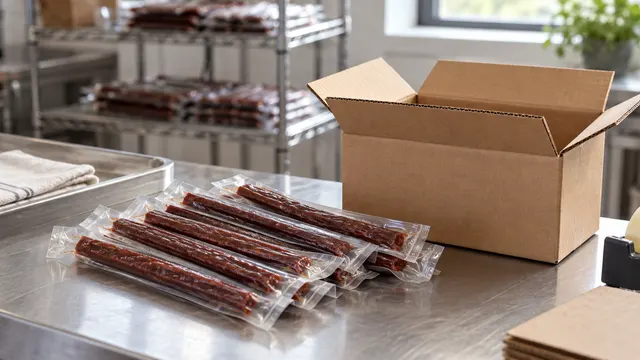
The Utah meat processor plans to expand its product range and retail customer base. Owner Douglas Reid says the funding will help bring its bison and elk meat sticks to more consumers.
The applied research aims to address constraints facing U.S. aquaculture through new scientific information and technology.
Louisiana State University Agricultural Center will develop integrated pest-management strategies for invasive pasture mealybug in Louisiana and Florida sugarcane.
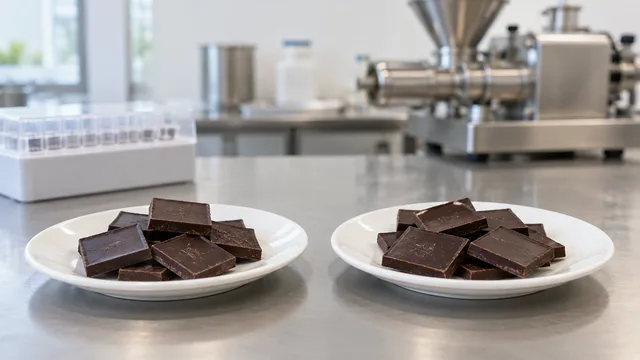
Eighteen healthy Japanese men consumed two chocolates made to the same formulation. Insulin and some triglyceride measurements differed, while glucose results did not meet the study’s significance threshold.
Users rated Nutri-Score highly for visibility and clear design, while nutrition panels received higher ratings for understandable information. The survey assessed perceptions and past experience, rather than tested comprehension.
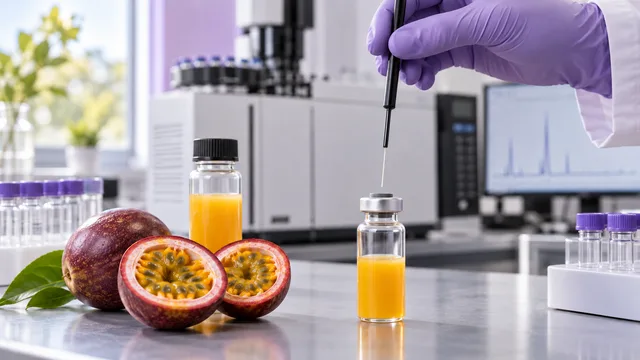
A laboratory study combined a metal-organic framework coating with commercial extraction fibres. The coatings produced different chemical profiles from the same pooled juice.
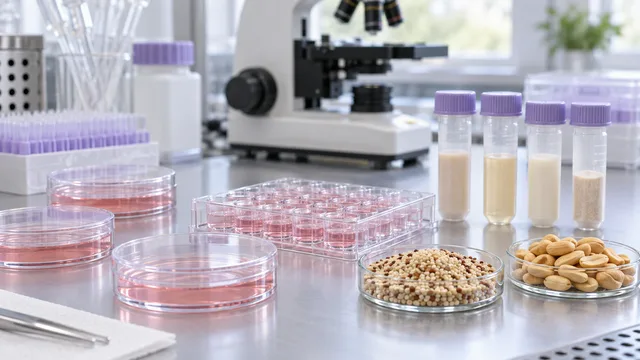
A study tests seed-protein extracts as coatings for mouse and bovine muscle cells. Responses differ between the cell models, and the candidate proteins have not yet been shown to explain the extracts’ effects on their own.
Public agencies in Hawaii, the Northern Mariana Islands, Guam and American Samoa will subaward support for small-scale food production.
A review of research through 2025 finds that protein, carbohydrate and lipid levels generally decline in infected pulse seeds. Results vary by crop and study, while amino-acid data and comparable monitoring remain limited.
Twelve projects across six states receive Acer programme awards for producer education and market development.
Working capital will support Angus beef processing in Faulkton, marketing and sales through a Sioux Falls storefront whose location was to be announced later.
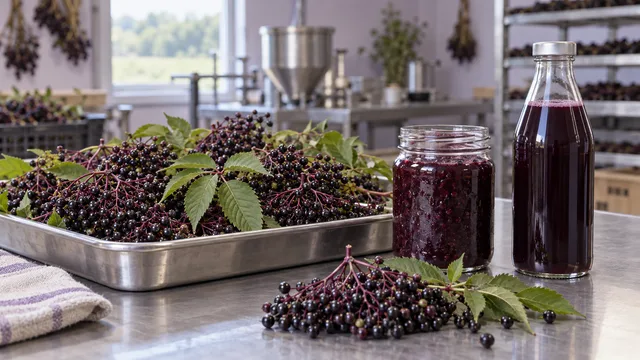
The grant supports processing, marketing and distribution of American-grown elderberry products at the Folsom, Louisiana farm.
A CSIRO mini-review brings together evidence on wheat-associated microbes, their antifungal activity and the effects of crop management. It calls for studies that connect microbial chemistry with interactions inside the plant and its environment.
Laboratory tests found lower viable bacterial counts in treated milk, cheese and yogurt than in controls. The authors distinguish this antibacterial result from safety assessment and broader strain coverage.
The SBIR/STTR funding announced by NIFA spans ten agricultural research areas, including food science and nutrition and aquaculture.
Research priorities include nutritional quality, water and nutrient efficiency, and tolerance to abiotic stress.
A study of freeze-dried cactus powder and pectin found higher tensile strength in selected blends, while the pectin-only control remained stronger. The films were hydrophilic, and the authors call for food-storage trials and quantitative degradation tests.
A Changzhou University team combined egg-white protein, carvacrol, luteolin and chitosan in a particle-stabilised coating. Coated fruit lost less weight and retained greater firmness than uncoated controls under the tested storage conditions.
In a 13-sample test, a knowledge-guided agent reported lower errors than similarity-based retrieval. Its advantage over gradient boosting was not statistically distinguishable on that test set.
In a Polish study with 77 consumers, ingredient and nutrition information raised expected liking of cashew and soy alternatives. Informed tasting brought liking back to levels not significantly different from blind tasting, while purchase intention fell from the information-only assessment.
A laboratory study tested juice-processing residue in soy-based and beef-based formulations. The authors selected different promising substitution levels, while sensory scores and texture depended on the product.
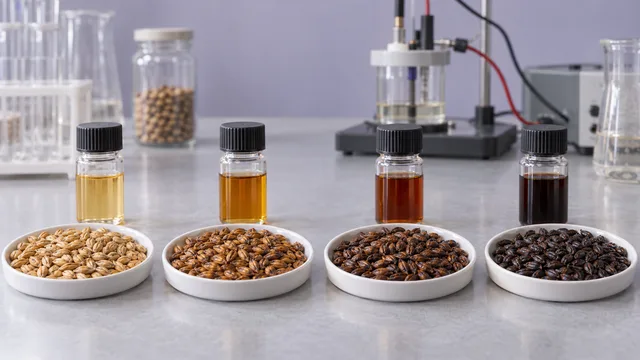
A laboratory sensor combines the human receptor OR5K1 with a nanomaterial-coated electrode. The study compares its electrical response with chromatographic measurements in four malt types.
Ahmet Aslan’s online study analysed 893 responses and examined associations between six factors, purchase intention and self-reported adoption.
An online survey of 1,074 mostly young adults in Peru found that three factors accounted for 79.0% of main-barrier responses. The data were collected in 2024 using convenience sampling.
Researchers compared Boju, Chuju, Gongju, Hangju and Huaiju using chromatography, mass spectrometry and electronic sensors to investigate variety differences.
Among 63 adults assigned to vegan or meat-rich diets, several urinary mycotoxin concentrations differed after adjustment for creatinine. The findings varied by toxin and statistical analysis.
Researchers tested three chromatography methods in two commercial drinks. Cubic calibration improved agreement, while the authors call for validation on more instruments and beverage matrices.
Four laboratory extraction methods produced concentrates containing 70.67–82.31% protein. Enzyme assistance improved several antioxidant assay results, while conventional extraction gave the highest emulsifying activity.
The award supports a University of Florida project addressing a freeze event through NIFA’s rapid-response weather programme.
A Polymers study compares nominal additive levels in laboratory films. The authors describe an intermediate formulation as a possible compromise and call for narrower loading ranges, reproducibility checks and real-food testing.
A September review links umami, aroma and sensory testing, while distinguishing evidence on mushroom ingredients from direct validation of residual fractions.
The sweetened white kidney bean formulations differed in sensory scores and composition. Phenolic bioaccessibility was measured in simulated digestion.
A study of 133 farming households separates production, own-food consumption and purchase. Exact overlap between produced and self-consumed food groups had a modest association with market dependence, but no consistent link with broader food insecurity or resilience.
A narrative review finds uneven deployment evidence across inspection, cutting, quality assessment and packaging, and calls for independent testing of complete systems.
A review of milk and egg proteins argues that allergen assessment should consider production, food processing and formulation together. The authors identify gaps in direct comparisons with native proteins.
A review of fermented legume proteins highlights improvements alongside losses in solubility, emulsion stability and digestibility. Useful ingredients require controlled processing and evidence matched to the final food.
A colour-based prototype was tested on Chinese-style lunch boxes using menu-specific food-area thresholds and a plastic cockroach model for foreign-object tests.
Researchers identified L. monocytogenes in 15 of 48 retail samples; the authors acknowledge limits from sample size and the absence of molecular confirmation.
Two projects receive support through NIFA’s weather-response programme, with the University of Florida and University of Hawaii named as awardees.
The NLGCA awards support education, research and outreach capacity; six listed institutions receive two awards each.
An analysis of 24,761 FDA product records for fiscal 2013–2025 found different hazard rankings at FDA and FSIS, while distinguishing recall activity from outbreak illness.
Researchers found L. monocytogenes in 28 of 214 raw meat samples and examined its genetic and biofilm traits. The survey identifies monitoring priorities without establishing a human outbreak.
A coating containing 2% cell-free supernatant gave the lowest measured microbial counts and oxidation indicators, with higher sensory ratings at day ten.
A hazelnut-press-cake fermentation trial compared three sucrose additions and monitored physical separation over 10 days of refrigerated storage.
A review proposes making fortified drinks from modular ingredients during long missions, while identifying unresolved formulation and engineering constraints.
In six facilities, drains accounted for 44 of 51 Listeria-positive environmental samples. The authors describe associated microbial variants as candidates requiring validation.
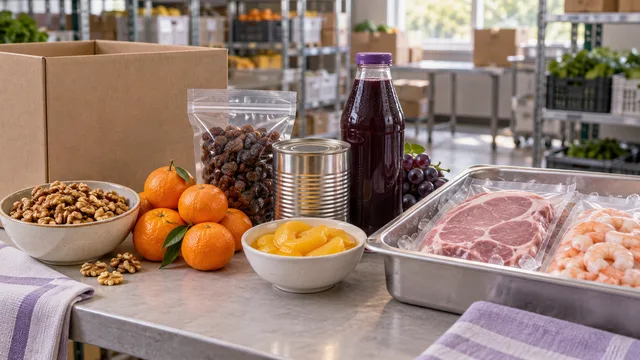
The August announcement covered eight commodity groups, including walnuts, pork products, fruit, grape juice and wild-caught shrimp for nutrition assistance programmes.
A study compared 12 commercial candies with gelatine or plant-derived gelling agents; recipes differed, and each consumer evaluated only four products.
An analysis of 42 policy documents found 29 aimed at schools and one devoted to hospital catering. The researchers examined policy content and commitments, rather than actual purchasing.
Discussions with 21 stakeholders in two regions informed GREENEDU NEXUS, a five-pillar framework joining curriculum, practical learning and school-food governance. Its effectiveness remains to be tested.
An August review compares sensing approaches for raw milk, milk powder, cheese and yogurt, and identifies limits in data, explainability and transfer between instruments.
A formulation study identifies a promising pulp-and-stabiliser combination for an underused fruit, but tests physical stability for only three days.
An August review places scale-down evidence, downstream compatibility and economic and environmental assessments inside the design–build–test–learn cycle.
In a comparison of four strains, Lactiplantibacillus plantarum XJ25 received the highest overall score from 12 trained assessors and differed in volatile profiles and antioxidant assays.
An online study used a fictional oat-drink advertisement with 445 respondents. Its structural model associated stronger greenwashing perceptions with lower brand trust.
Among 215 adults recruited for an online survey, 72.09% rated taste very important when buying groceries. The authors describe the findings as a regional benchmark from a non-probability sample.
Twenty young people with East and West African backgrounds described food as a source of identity and belonging, alongside barriers involving prices, supermarket ranges and discrimination. Views on sugary-drink taxes and marketing restrictions varied.
A system dynamics study compared eight tax and spending scenarios. Increasing payments to existing Juntos recipients produced the largest modelled reduction in child stunting, with most of that reduction among the poorest group.
A paper revisiting work from 2016–2020 reports unquantified workshop feedback and a notional simulation. Planned indicator-based monitoring in Karamoja was interrupted by the COVID-19 response.
Northern Arizona University is the recipient named in USDA’s announcement of funding through its rapid-response weather programme.
Researchers examining 35 visibly mouldy white maize cobs in Malawi found toxins in neighbouring sections. The authors support separating affected cobs before shelling and identify limits to what the spatial measurements explain.
Researchers analysed injury and grain yield after an August 2024 hail event. The authors describe the genetic signals as preliminary and call for validation in additional environments and populations.
A review of 38 documents finds local governments working through food-access monitoring, partnerships and council-run facilities, with limited evaluation of lasting dietary and equity outcomes.
A Foods reanalysis of 12 beef cuts separated complete sensor acquisitions during testing. Feature summaries explained much of the difference between tree and neural models.
An August review compares sensing approaches for ice damage, oxidation and water redistribution, with emphasis on product-specific validation and cold-chain conditions.
A Food Chemistry: X review describes how lactic acid fermentation changes egg proteins, emulsions and foams. Results vary between studies, while direct evidence of health benefits from fermented egg products remains absent.
Biological approaches offer several routes to more stable products, but protective effects and fermentation economics depend on the strain and the factory.
An eight-week study of 72 goats compared four diets. The authors reported no significant main diet effect on milk yield or the measured plasma antioxidant capacity, and called for full-lactation research.
A laboratory study combines gelatin with cobalt metal–organic frameworks made using gallic acid. The films showed stronger colour changes at higher filler levels, alongside changes in water permeability and mechanical performance.
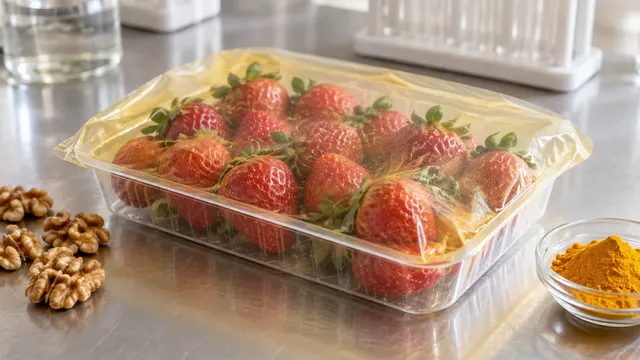
Turmeric- and oregano-enriched chitosan–alginate films were compared with plain film and PET packaging. Higher vitamin C concentrations after 14 days at 4 °C were specific to that storage condition; the study found no consistent bacterial-count advantage.
A Foods study tested honey, milk, fish and shrimp extracts. The fluorescence response took six minutes after extraction, with fortified-sample recoveries of 85.2–106.8%.
Nanoscale cavities in gallium arsenide trap model plastic particles and report changes in reflected colour. The study combines shape sorting with polymer-sensitive optical signals; testing real environmental and biological samples is proposed as future work.
A survey of 242 semi-intensive farms in Central Macedonia associated reported feeding practices with milk composition. The cross-sectional study sampled one goat per farm and does not establish causal feeding effects.
A Brazilian study compared three formulations and measured fibre in flour made from strawberry, pineapple and ginger residues. The authors distinguish the recipe comparison from an isolated ingredient effect.
The August review maps recovery and reintegration pathways and examines contaminant control, nutritional evidence, cost and coordination among sectors.
The curcumin-containing film performed well on several quality measures, while PVC limited weight loss most. The laboratory study leaves formulation and commercial-use questions open.
A questionnaire study at PX Mart stores in Taichung analysed 418 responses about app use and meat offered at a 40% discount.
Seval Bircan Yılmaz Yıldız’s document analysis recognises existing public provision and proposes a national guarantee with local delivery. The proposed model has not been empirically tested.
A scoping review and 18 stakeholder interviews identify classification problems, competing priorities and administrative constraints in nutrition-related fiscal policy.
A study applied Brazil’s front-of-pack criteria and an adapted PAHO model to selected social-media food promotions; it reported different potential coverage of restrictions.
Oil-containing whey-protein gels had lower visible decay at 4 °C on day 21. A magnesium–cinnamon oil formulation received lower liking scores than uncoated fruit in the first two weeks.
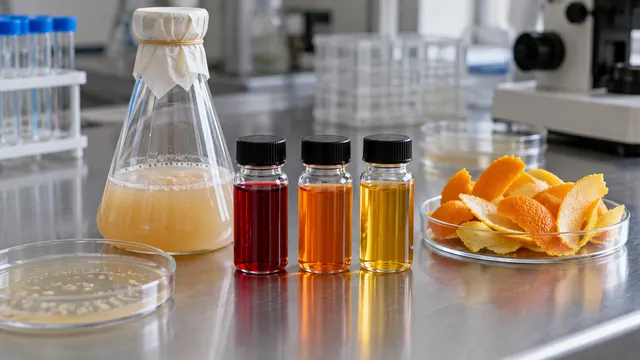
The July review links food-processing residues with pigment production and identifies feedstock consistency, downstream costs, product quality and environmental assessment as connected challenges.
An Australian survey analysed 118 responses about industry communication, sponsored education, gifts and organisational policies; 86 respondents were dietitians.
A qualitative study at one Marlow Foods site describes shift workers’ experiences and proposes organisational support for healthier eating.
For people who make, study and shape the future of food.
Explore our approach to sources